

Crown Vintage
Omega Speedmaster Mark II 'Racing Dial' 145.014 42mm 1970s
Omega Speedmaster Mark II 'Racing Dial' 145.014 42mm 1970s
Couldn't load pickup availability
Omega Speedmaster Mark II 'Racing Dial' 145.014 42mm 1970s
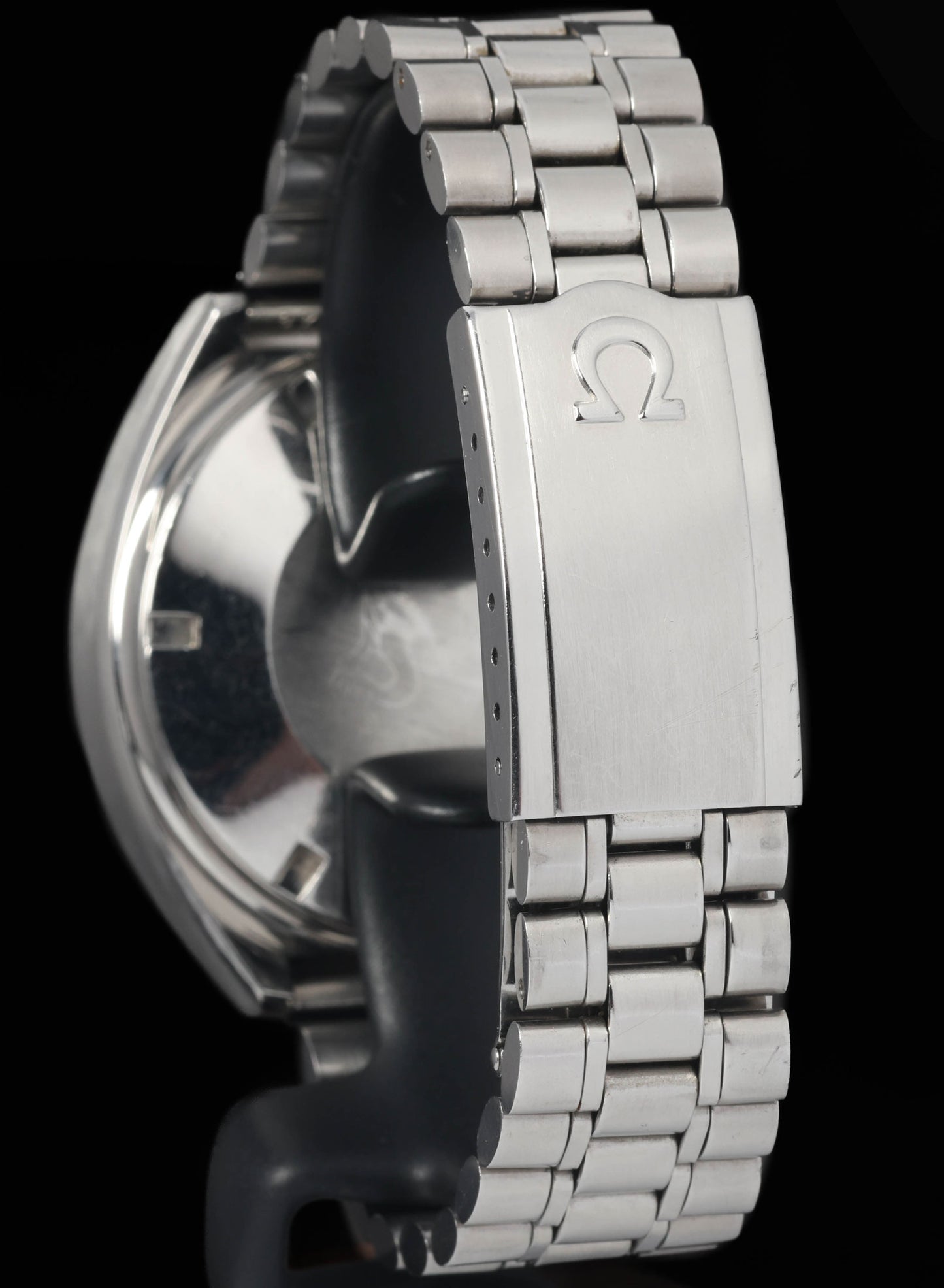
This Omega Speedmaster Mark II 145.014 is in great vintage condition overall. The case shows light hairlines around the surfaces consistent with careful wear, with evidence of a light polish that has preserved the original lines and proportions well. Edges remain defined and the watch presents strongly on the wrist. The dial is lightly oxidised, adding a subtle vintage character without impacting legibility, with printing remaining clear and intact. The hands are in great condition, with no significant blemishes or damage visible under close inspection.
Share
Why we love this watch
Why we love this watch
Omega Speedmaster Mark II 145.014: A Modernist Evolution of the Moonwatch
Introduction
Produced between 1969 and the mid 1970s, the Omega Speedmaster Mark II reference 145.014 represented the first major redesign of the Speedmaster Professional after the Apollo 11 landing. Rather than altering the core identity of the Moonwatch, Omega created a parallel model that carried the same mechanical foundation yet embraced a distinctly modern aesthetic.
The 145.014 introduced a new tonneau shaped case, a front-loading monocoque construction, a mineral crystal with an internal tachymeter scale and dial configurations that departed from the familiar black and white format of the classic Speedmaster. Although it shared the calibre 861 with the contemporary Speedmaster Professional, Omega never submitted the 145.014 to NASA for testing. Its purpose was commercial and stylistic rather than operational, allowing Omega to explore new design directions while the original Speedmaster continued serving NASA’s needs.
What emerged was a watch that still felt unmistakably like a Speedmaster, yet stood apart as a clear product of late 1960s industrial design.
The Development of the Speedmaster Mark II 145.014
Responding to Shifting Design Trends
During the late 1960s, watches were becoming larger, flatter and more integrated in form. Case designs across the industry were moving towards tonneau shapes, with wide surfaces and pronounced brushing that conveyed strength and modern engineering.
Omega was aware that the Speedmaster Professional’s lyre-lug case was iconic, but it also recognised that the design language of the era was rapidly changing. The company began developing a model that retained the familiar tri-register chronograph layout while presenting it in a more contemporary structure.
The result was the Speedmaster Mark II 145.014. It offered a streamlined silhouette with hidden lugs, a powerful central case mass and a flat, instrument-like display that matched the aesthetic of dashboards, aviation instruments and industrial equipment of the late 1960s.
A New Case Architecture
One of the defining characteristics of the 145.014 was its monocoque, or front-loading, case construction. The movement was not accessed via a caseback. Instead, the crystal and its securing ring were removed from the front for servicing.
This approach increased structural rigidity and improved resistance to impacts. The case also protected the crown and pushers by recessing them into the broader body of the watch. This was a significant shift from the Pro’s more exposed pusher arrangement.
The 145.014 case was wider, flatter and heavier than the classic Speedmaster Professional. The weight was distributed horizontally, giving the watch a lower, more stable fit on the wrist.
Launching in the Apollo Era
The release of the 145.014 coincided with the height of the Apollo program. While the Speedmaster Professional had just become the first watch worn on the Moon, the Mark II represented Omega’s desire to evolve the Speedmaster platform for the civilian market.
Omega did not intend for the 145.014 to replace the Professional. Instead, it demonstrated that the brand could maintain the Moonwatch legacy while simultaneously expanding the Speedmaster family with a watch that reflected contemporary design.
Why NASA Did Not Test the Speedmaster Mark II 145.014
NASA’s Qualification Applied Only to the Original Case
NASA’s original qualification process, completed in 1965, applied only to the Speedmaster models submitted at the time: references 105.003, 105.012 and 145.012. These watches underwent extreme testing involving heat, humidity, vacuum, acceleration, deceleration and shock.
The 145.014 was never submitted. NASA continued to issue the already qualified Professional for missions, and Omega saw no operational need to propose a new model.
A New Case Required a Full Qualification Cycle
Although the 145.014 used the calibre 861, the same movement that later became standard in the Speedmaster Professional, its case architecture was entirely different. The monocoque case, recessed pushers, mineral crystal and internal tachymeter scale meant the watch would have required a full repeat of NASA’s destructive testing.
Omega chose not to pursue this. NASA also had no incentive to restart the program, as the original Professional remained fully suited to its needs.
Institutional Momentum Behind the Moonwatch
By 1969, the Speedmaster Professional was deeply entrenched within NASA’s operational systems, training programs and equipment inventories. Introducing a new design would have required budget allocations, compatibility checks and procedural updates.
The 145.014 therefore remained a commercial model for the public rather than a tool proposed for spaceflight.
Dial Variants of the 145.014
The Standard Black Dial
The primary version of the 145.014 featured a matte black dial with white text. It retained the classic tri register layout: continuous seconds at 9 o’clock, 30-minute counter at 3 o’clock and 12-hour counter at 6 o’clock.
What made the dial visually unique was the internal tachymeter scale printed on a metal ring beneath the mineral crystal. This configuration made the tachymeter appear recessed, creating a depth effect that differed from the external bezel of the Moonwatch.
The Racing Dial
The 145.014 is famously known for its Racing dial variant, which used a grey main surface, radial orange minute markers and bright accents throughout the chronograph display.
The design referenced Omega’s long association with motorsport. Its bolder palette improved visibility and aligned with the brightly coloured timing instruments found in rally and track environments of the era. The combination of orange chronograph hands and the multicoloured outer track gave the 145.014 Racing a distinctive identity that remains one of the most recognised Mark II configurations.
Gold Plated and Gold Filled Versions
Omega also released gold plated and gold filled 145.014 variants. These models shared the same design but featured brushed gold finishes paired with matching bracelets. The dials in these versions typically displayed sunburst finishing in warm tones, giving the watch a more dressed appearance while still using the calibre 861.
Subtle Dial Variations Within the Reference
Across its production life, small details such as hand shapes, lume characteristics and printing thickness varied slightly. Despite these differences, all versions were tied to the structural and visual identity of the 145.014.
Case, Crystal and Bracelet Construction
The Tonneau Case of the 145.014
The tonneau case of the 145.014 was one of the most forward-thinking chronograph designs of its era. Wide, flat brushed surfaces dominated the top side, while the polished chamfers on the edges provided contrast. The case measured approximately 41.75 mm across, though it felt larger due to its shape and weight.
This was a watch designed to look like a single block of metal, emphasising solidity over curvature.
Mineral Crystal and Internal Tachymeter Ring
A major innovation for the 145.014 was the use of a mineral crystal instead of hesalite. The tachymeter ring sat beneath the crystal, printed on its own metal insert. This meant the scale could not wear or fade from external contact.
Viewed at an angle, the internal tachymeter gave the dial a sense of depth that differed strongly from the original Speedmaster Professional.
Bracelet Options
The 145.014 was paired with period appropriate Omega bracelets, including the 1162 with 173 end links. These bracelets carried wide, flat links that visually complemented the case shape. The integration between bracelet and case made the watch feel cohesive and modern.
The Calibre 861 Movement
The Successor to the Calibre 321
The 145.014 used the calibre 861, introduced by Omega in 1968 as the successor to the column-wheel calibre 321. The 861 employed a cam switching system, which was more robust, easier to service and more consistent in operation.
This movement became the backbone of the Speedmaster line for more than two decades.
Why the 861 Fit the Mark II Platform
The cam switching mechanism tolerated shocks better than a column wheel system, and the increased beat rate improved timing precision. This made it well matched to the thick, protective structure of the 145.014.
Final Thoughts
The Omega Speedmaster Mark II reference 145.014 stands as one of the most original and forward looking interpretations of the Speedmaster chronograph. Produced from 1969 into the 1970s, it offered a new case shape, new materials and new dial options while preserving the mechanical integrity of the Speedmaster line through the calibre 861.
Although it never underwent NASA qualification, the 145.014 was not created for spaceflight. It was built for a world undergoing rapid technological and stylistic change. Its tonneau case, internal tachymeter ring and Racing dial reflected a design era that embraced industrial strength, improved legibility and bold visual expression.
Today, the 145.014 remains an important reference within the Speedmaster lineage. It provides insight into Omega’s evolution during a transformative period in watchmaking and stands as a reminder that the Speedmaster identity has always been capable of growth, adaptation and reinvention while maintaining its core heritage.
Case & Bracelet
Case & Bracelet
- Case in great vintage condition, light hairlines visible around the case.
- Case lightly polished.
Dial & Hands
Dial & Hands
- Dial lightly oxidised
- Hands are in great condition.
Warranty & Condition
Warranty & Condition
Crown Vintage Watches provides a minimum 6-month mechanical warranty on pre-owned watches, from the date of purchase.
The warranty covers mechanical defects only.
The warranty does not cover damages such as scratches, finish, crystals, glass, straps (leather, fabric or rubber damage due to wear and tear), damage resulting from wear under conditions exceeding the watch manufacturer’s water resistance limitations, and damage due to physical and or accidental abuse.
Please note, water resistance is neither tested nor guaranteed.
Shipping and insurance costs for warranty returns to us must be covered by the customer. Returns must be shipped via traceable courier. Return shipment must be pre-paid and fully insured. Collect shipping will be refused. In case of loss or damages, the customer is liable.
Our Pledge
At Crown Vintage Watches, we stand by the authenticity of every product we sell. For added peace of mind, customers are welcome to have items independently authenticated at their own expense.
Condition
Due to the nature of vintage timepieces, all watches are sold as is. We will accurately describe the current condition and working order of all watches we sell to the best of our ability.
Shipping & Refund
Shipping & Refund