

Crown Vintage
Rolex GMT Master 1675 'Fuchsia' Pepsi 40MM 1968
Rolex GMT Master 1675 'Fuchsia' Pepsi 40MM 1968
Couldn't load pickup availability
Rolex GMT Master 1675 'Fuchsia' Pepsi 40MM 1968
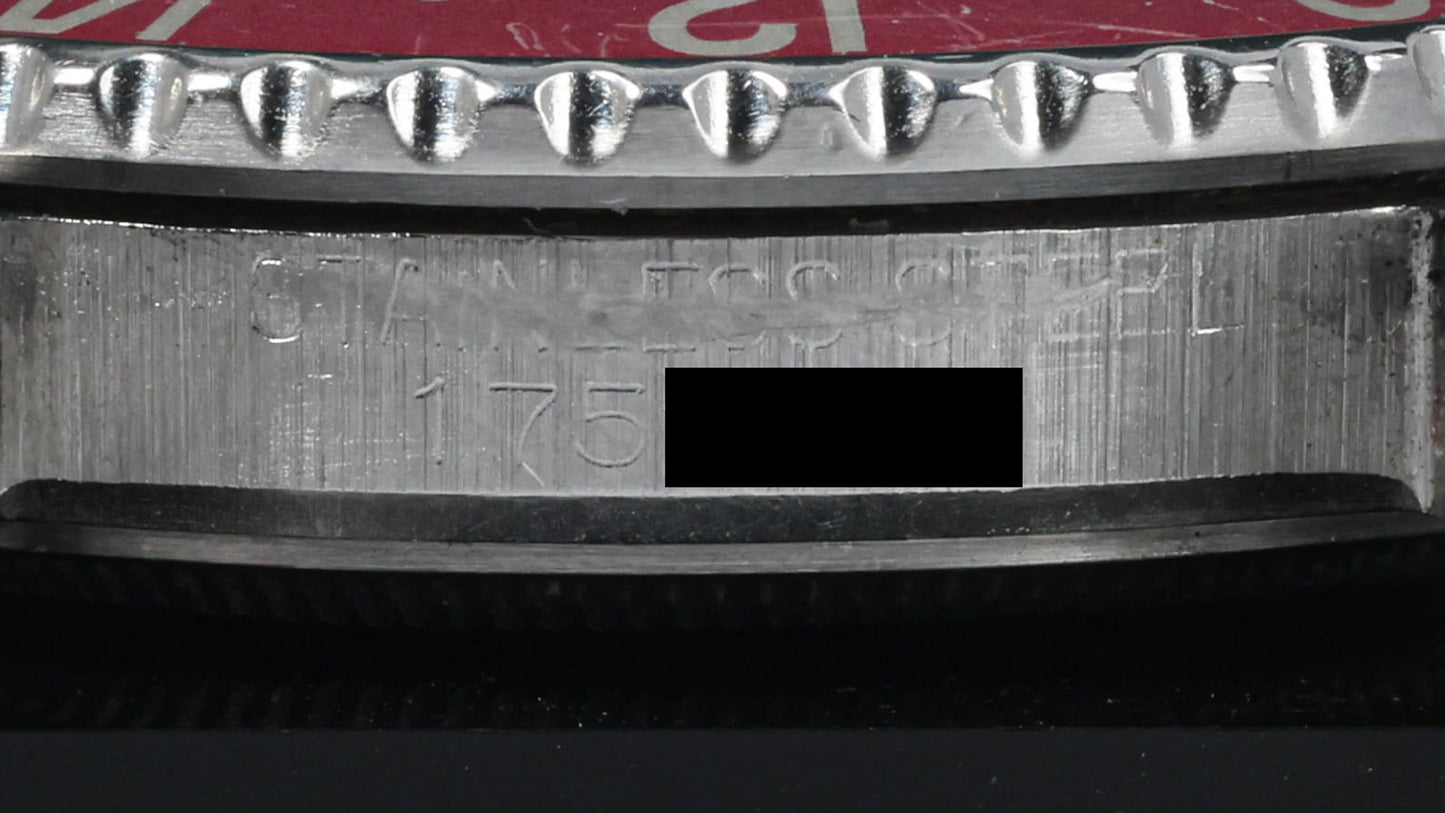
Rolex GMT Master 1675 “Fuchsia” Pepsi 40mm 1968 in great vintage condition. The case presents with honest wear, with hairlines visible around the case that are consistent with careful use over time. The bracelet shows some stretch as to be expected for a watch of this age, but remains secure and comfortable in daily wear. The dial is an excellent example of a Mark 4 matte dial, with crisp printing. Hands display matching patina to the dial, giving the watch a cohesive, well aged look without distracting blemishes. Please note, due to its age, this watch should be treated as a vintage timepiece and not be worn whilst swimming or exposed to water, regardless of its original intended use.
Share
Why we love this watch
Why we love this watch
Rolex GMT Master 1675 Fuchsia Pepsi 40MM 1968
Introduction
Produced between 1959 and 1980, the Rolex GMT Master 1675 became one of the most recognisable dual time zone watches in the world. Within this long production run, a small group of early bezels emerged with a distinctive shade of magenta that would later become known as the fuchsia insert. The 1968 examples featuring this bezel have taken on a status that sets them apart, blending technical history, purposeful design, and a rare aesthetic variation that feels unmistakably tied to the era. The fuchsia 1675 stands out because it captures a moment when Rolex was refining the GMT line while still relying on production techniques that allowed natural colour shifts, material differences, and subtle imperfections to appear.
The Origins of the GMT Master
Why Rolex Made It
The GMT Master was designed in the mid 1950s to meet the needs of the expanding jet age. Pan American World Airways approached Rolex seeking a wristwatch that could track two time zones simultaneously for pilots flying long-haul transcontinental routes. The solution was the original reference 6542, which introduced the red and blue 24 hour bezel and fourth hand to represent home time. By the late 1950s, Rolex had refined the design into the 1675, giving it a more robust case, crown guards and a metal dial construction that would remain in use for decades.
A Decade of Technical Refinement
The 1675 embodied the transition from early tool watch experimentation into mature, dependable sports watch design. It introduced softer pointed or square crown guards depending on the year, moved from gilt gloss dials to matte dials, and progressed from small arrow 24 hour hands to larger, more visible versions. These evolutionary changes help define why earlier examples remain distinct, and why the fuchsia variant sits in a narrow window of production that Rolex never replicated.
Understanding the Fuchsia Insert
Why the Colour Exists
The bezel insert on early 1675 models was made using anodised aluminium. Rolex produced the classic red and blue combination, but the manufacturing processes of the era meant the red portion could age in unpredictable ways. Exposure to sunlight, humidity, and the anodising chemistry itself all influenced the final appearance. In certain batches made during the late 1960s, the red tone began shifting towards a vivid magenta. Rather than being a deliberate design decision, the colour developed naturally from the materials and dyes used.
A Colour with its Own Identity
The fuchsia tone is not subtle. It carries a bold contrast against the deep blue half of the bezel, making the watch highly distinctive even at a distance. When paired with a matte dial and tritium lume aged to a soft cream, the watch takes on a balanced but unmistakable character. The insert brings a sense of 1960s colour palette influence, echoing the decade’s embrace of stronger hues across design, fashion, and consumer products.
The 1968 Moment
A Snapshot in Rolex Production
The period around 1968 represents a shift in GMT Master production. Matte dials with white text had fully replaced gilt printing. The 1675 was transitioning in small but meaningful ways through changes to handsets, font styles, and bezel sourcing. This narrow window is when many fuchsia inserts were produced. They were not found across the entire decade, nor did they appear uniformly. That is partly why 1968 examples feel so closely tied to the phenomenon.
The Appeal of Early Matte Dials
The matte dials of the late 1960s are prized for their clarity and simplicity. They removed the reflective gloss of earlier gilt dials and introduced a more functional aesthetic. The contrast between the matte black surface, crisp white lettering, and warm tritium plots works beautifully with the vibrant bezel. The entire watch sits at the intersection of technical purpose and mid century colour expression.
Wearing the 1675 Fuchsia
Case Size and Proportions
The 40mm case of the 1675 feels refined and balanced. Rolex had perfected proportions that still feel contemporary today, with slim profile aesthetics that differ from later, heavier sports references. The combination of the slim case sides, domed plexiglass crystal, and tapering Oyster bracelet creates a level of comfort suited to daily wear.
Practical Functionality
The fourth hand and rotating 24 hour bezel remain fully functional and practical features. Travellers can track departure and arrival time zones with ease. The simplicity of the movement and the clarity of the layout mean the watch continues to serve its original purpose while retaining the aesthetic charm of its era.
A Rich Historical Backdrop
Role in Aviation Culture
The GMT Master became tied to the romance of aviation. As jet travel expanded, airlines adopted the watch as part of their professional toolkit. Pan Am pilots wore versions of the reference throughout the 1960s and 1970s, reinforcing its association with global travel, long haul flight, and the reliability required in the cockpit.
Cultural Presence
Though initially made for professionals, the GMT Master soon crossed into mainstream culture. It appeared on the wrists of actors, explorers, and individuals who valued the combination of toughness and understated style. The fuchsia variant, despite being originally an unintended colour shift, found itself at the centre of this broader cultural life as people gravitated towards watches with more personality.
Why the Fuchsia Variant Endures as a Favourite
A Rare Intersection of Colour and History
The fuchsia insert represents a perfect storm of early production methods, mid century design trends, and Rolex’s own evolution. No modern model recreates this tone naturally. No later aluminium bezels display the same magenta shift. This makes the fuchsia insert not only visually appealing but historically significant.
Each Example Ages Differently
Every fuchsia insert carries its own exact shade based on environmental exposure. Some lean towards purple, others toward a bright magenta. The individuality of each insert makes these watches feel personal and distinctive, while still being part of a clearly defined subset of the reference.
Period Correct Charm
A 1968 matte dial 1675 with a fuchsia insert brings together the elements that define the most admired vintage Rolex sports watches. Acrylic crystal, tritium lume, slim case lines, aluminium bezel, and a design free from modern embellishment all contribute to a cohesive vintage character.
Final Thoughts
The Rolex GMT Master 1675 fuchsia from 1968 remains one of the most distinctive expressions of the GMT line. It reflects a period of rapid evolution in Rolex design, a materials driven colour variation that has become synonymous with the era, and the broader history of aviation that shaped the purpose of the watch. Its vivid bezel, balanced proportions, and matte dial work together to create a piece that feels rooted in its time while remaining timeless on the wrist.
Case & Bracelet
Case & Bracelet
- Case in very good vintage condition, hairlines visible around the case.
- Bracelet has some stretch as to be expected with age.
Dial & Hands
Dial & Hands
- Dial is an Excellent example of a MK4 matte dial.
- Hands matching patina.
Warranty & Condition
Warranty & Condition
Crown Vintage Watches provides a minimum 6-month mechanical warranty on pre-owned watches, from the date of purchase.
The warranty covers mechanical defects only.
The warranty does not cover damages such as scratches, finish, crystals, glass, straps (leather, fabric or rubber damage due to wear and tear), damage resulting from wear under conditions exceeding the watch manufacturer’s water resistance limitations, and damage due to physical and or accidental abuse.
Please note, water resistance is neither tested nor guaranteed.
Shipping and insurance costs for warranty returns to us must be covered by the customer. Returns must be shipped via traceable courier. Return shipment must be pre-paid and fully insured. Collect shipping will be refused. In case of loss or damages, the customer is liable.
Our Pledge
At Crown Vintage Watches, we stand by the authenticity of every product we sell. For added peace of mind, customers are welcome to have items independently authenticated at their own expense.
Condition
Due to the nature of vintage timepieces, all watches are sold as is. We will accurately describe the current condition and working order of all watches we sell to the best of our ability.
Shipping & Refund
Shipping & Refund