

Crown Vintage
Rolex Submariner 5513 'Meters First' 40mm 1967
Rolex Submariner 5513 'Meters First' 40mm 1967
Couldn't load pickup availability
Rolex Submariner 5513 'Meters First' 40mm 1967
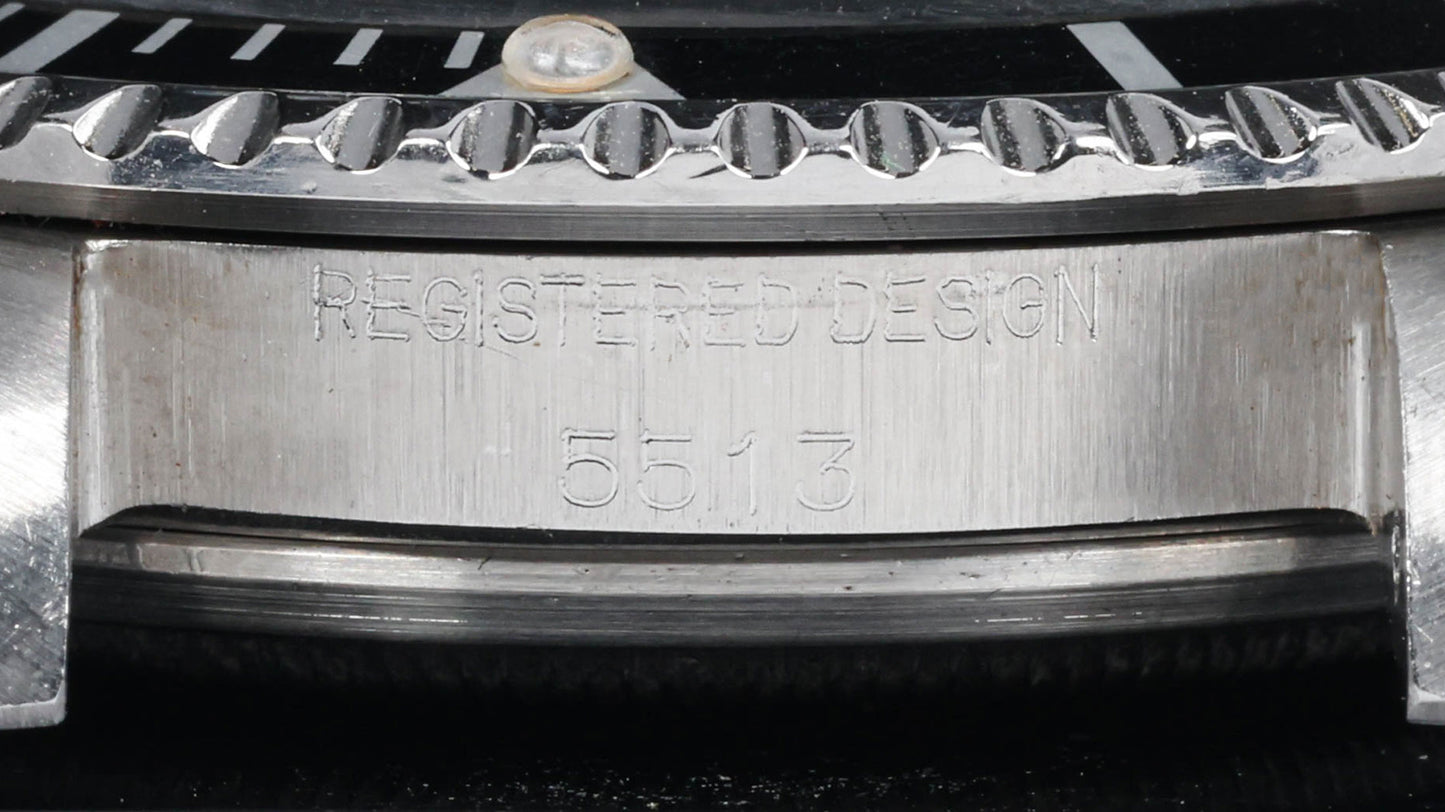
Presented in excellent overall condition, this Rolex Submariner 5513 “Meters First”, 40 mm, retains crisp, original case geometry with little to no wear visible. The lugs are extremely sharp, with factory brushing and clear chamfers still present. The rotating bezel turns cleanly; the insert shows legible numerals and only minor handling marks on close inspection. Acrylic crystal is clear and free of distracting scratches. The original folded Oyster bracelet is in very good condition with minimal stretch; links articulate smoothly and the clasp closes securely. Crown action is reassuringly precise. Dial and hands are in very good condition, with crisp printing, tidy luminous plots and matching tone to the hand set. A strong, honest example that wears exceptionally well. Given its age, it should be treated as a vintage timepiece; water exposure is not recommended and it should not be worn whilst swimming.
Share
Why we love this watch
Why we love this watch
Rolex Submariner 5513 from 1967 featuring metres first depth rating and zinc sulfide tritium luminous material.
Introduction
The 1967 Submariner 5513 reflects a stage in Rolex’s development when the company was refining the design and technical details of its dive watches. This example carries the early matte dial layout introduced during the late 1960s, with white printed text, a metres first depth rating and luminous plots made from tritium mixed with zinc sulfide. These traits allow the watch to be placed firmly within its production period and illustrate the construction methods Rolex used at the time.
This era saw the transition from earlier glossy gilt dials to matte finishes, from pointed crown guards to more rounded shaping, and from radium lume to safer tritium-based material. As a result, a 1967 5513 demonstrates the features that shaped later Submariner production while still retaining the manufacturing characteristics of the 1960s.
The Submariner Line Leading to the 5513
Development of Rolex’s Dive Watch
Rolex introduced its first Submariner in the early 1950s as part of a move toward purpose-built tool watches. The earliest references established the core elements that would define the line: a rotatable bezel, high water resistance, luminous hands and markers, and an emphasis on legibility.
Throughout the 1950s and early 1960s, Rolex continued to refine case geometry, crown guard shapes, bezel construction and dial printing. The reference 5513 was introduced in 1962 as a no date Submariner designed to provide a clear, functional display for underwater timing.
Changes Through the 1960s
From its introduction, the 5513 went through several design updates. The transition from gilt printing to white text began around the mid 1960s. At the same time, Rolex refined the lume mixture used on dials and hands, shifting away from radium toward tritium combined with zinc sulfide.
Case details also evolved. Crown guards became more rounded, bezels became more robust and dial printing methods became more consistent. These cumulative changes shaped the appearance of the watch by the time this 1967 example was produced.
The Metres First Matte Dial
Dial Layout and Printing
The dial used during 1967 features a matte black surface with white printed text. The depth rating appears as 200m = 660ft, with metres presented first. This format aligns with the metric-first convention used during this period.
The dial follows the two-line layout typical for the 5513, with the model name and depth rating printed beneath the centre pinion. The matte finish reduced reflections underwater and improved readability, while the white text created clear contrast.
Luminous Material: Tritium with Zinc Sulfide
Rolex used a luminous mixture based on tritium combined with zinc sulfide phosphor. Tritium acted as the energy source, and zinc sulfide produced the visible glow. The luminous plots were hand applied, resulting in small variations in size and texture across the dial.
This material was standard for Rolex at the time. Over time, zinc sulfide-based tritium develops predictable ageing characteristics depending on environmental exposure, but the paint used in 1967 follows the same mixture across both dial and handset.
Hands and Lume Consistency
The hands on a 1967 5513 were filled with the same luminous compound used on the dial. Ageing differences may occur naturally due to different exposure environments for the hands and dial, but the original paint type is identical.
Case and Bezel Construction
Oyster Case Design
The 5513 uses a 40 mm Oyster case with crown guards. By 1967, the case had taken on the more rounded crown guard shape that remained in production for years. The case was designed for durability and water resistance, forming the structural foundation of the watch.
The symmetrical design, with no date window, contributes to the straightforward presentation of the time display. The case proportions used during this period became the basis for later Submariner references.
Bezel and Insert
The watch is fitted with a bidirectional rotating bezel and an aluminium insert. The insert includes a luminous pearl at the zero marker. Aluminium was used for its balance of weight, corrosion resistance and ease of manufacturing.
The bezel font and layout align with the conventions Rolex used throughout the 1960s.
Plexiglass Crystal
The crystal on a 1967 5513 is acrylic plexi. This material provided better impact resistance than mineral glass and could be polished to remove surface marks. The slightly domed shape of the plexi contributed to the overall appearance of the watch and formed part of the Submariner’s visual identity for decades.
Movement and Performance
Calibre 1520
The 5513 typically used the Rolex calibre 1520, a manual-wind-derived automatic movement. It operated at 19,800 vibrations per hour and was engineered to perform consistently in a range of conditions.
This movement did not include a date mechanism, reflecting the functional simplicity of the 5513.
Engineering Focus
During this period, Rolex prioritised durability and consistent operation. The movement architecture used steady-going components, shock resistance and a tested automatic winding system that could withstand the demands of underwater use and regular wear.
The 5513 Within Rolex’s Development
A Reference with Long Production
The 5513 remained in production for more than twenty-five years. Its long run came from its functional design, reliability and adaptability to incremental updates. Watches produced during 1967 sit in the earlier phase of this production span, showcasing the characteristics of the era before later manufacturing refinements were introduced.
Dial Evolution
The matte dial era introduced in the late 1960s marked a shift toward stronger contrast and improved underwater visibility. Dials from the earliest years of this period, such as those from 1967, illustrate the beginning of this transition and retain details that differ slightly from later matte examples.
Diving Functionality
The 5513 remained focused on the requirements of underwater timing. The rotating bezel, luminous plots, screw-down crown and robust movement formed a combination suited for practical diving tasks.
The 1967 5513 with Zinc Sulfide Metres First Dial
Appearance and Structure
This configuration includes the early matte dial, metres-first depth rating and tritium zinc sulfide luminous material applied to both the dial and hands. These elements link the watch to its production period and provide a clear representation of how Rolex constructed its dive watches during the late 1960s.
The two-line layout, clear printing and matte surface produce a functional display suitable for underwater visibility. The case and bezel proportions align with Rolex’s mid 1960s design direction, forming a structure that continued in later models.
Material and Manufacturing Characteristics
The luminous paint mixture, the hand-applied plots, the printing method and the acrylic crystal all correspond with the technologies Rolex used at the time. These materials reflect the production environment of the 1960s and illustrate the practical decisions that shaped the watch’s design.
Durability and Longevity
Watches from this period were built with durability as the primary objective. The combination of the Oyster case, the movement architecture and the functional dial layout created a watch designed to handle varied conditions over long periods.
Final Thoughts
The 1967 Rolex Submariner 5513 with a metres first matte dial and zinc sulfide tritium lume presents the features Rolex used while refining the Submariner during the late 1960s. The dial layout, case design, luminous material and movement all reflect the construction choices made by Rolex during this period.
This configuration demonstrates how the Submariner evolved from its earlier gilt-dial origins into the matte-dial era that influenced the appearance of the watch for many years. The materials and design details seen in this example offer a clear view of the production standards and functional priorities that shaped Rolex’s dive watches during the decade.
Case & Bracelet
Case & Bracelet
- Case in excellent condition, little to no wear visible.
- Bracelet original folded oyster in very good condition, minimal stretch visible.
- Lugs extremely sharp with factory brushing and chamfers visible.
Dial & Hands
Dial & Hands
Dial & hands very good condition.
Warranty & Condition
Warranty & Condition
Crown Vintage Watches provides a minimum 6-month mechanical warranty on pre-owned watches, from the date of purchase.
The warranty covers mechanical defects only.
The warranty does not cover damages such as scratches, finish, crystals, glass, straps (leather, fabric or rubber damage due to wear and tear), damage resulting from wear under conditions exceeding the watch manufacturer’s water resistance limitations, and damage due to physical and or accidental abuse.
Please note, water resistance is neither tested nor guaranteed.
Shipping and insurance costs for warranty returns to us must be covered by the customer. Returns must be shipped via traceable courier. Return shipment must be pre-paid and fully insured. Collect shipping will be refused. In case of loss or damages, the customer is liable.
Our Pledge
At Crown Vintage Watches, we stand by the authenticity of every product we sell. For added peace of mind, customers are welcome to have items independently authenticated at their own expense.
Condition
Due to the nature of vintage timepieces, all watches are sold as is. We will accurately describe the current condition and working order of all watches we sell to the best of our ability.
Shipping & Refund
Shipping & Refund