

Crown Vintage
Rolex Submariner 5513 Tropical Dial 40mm 1967
Rolex Submariner 5513 Tropical Dial 40mm 1967
Couldn't load pickup availability
Rolex Submariner 5513 Tropical Dial 40mm 1967
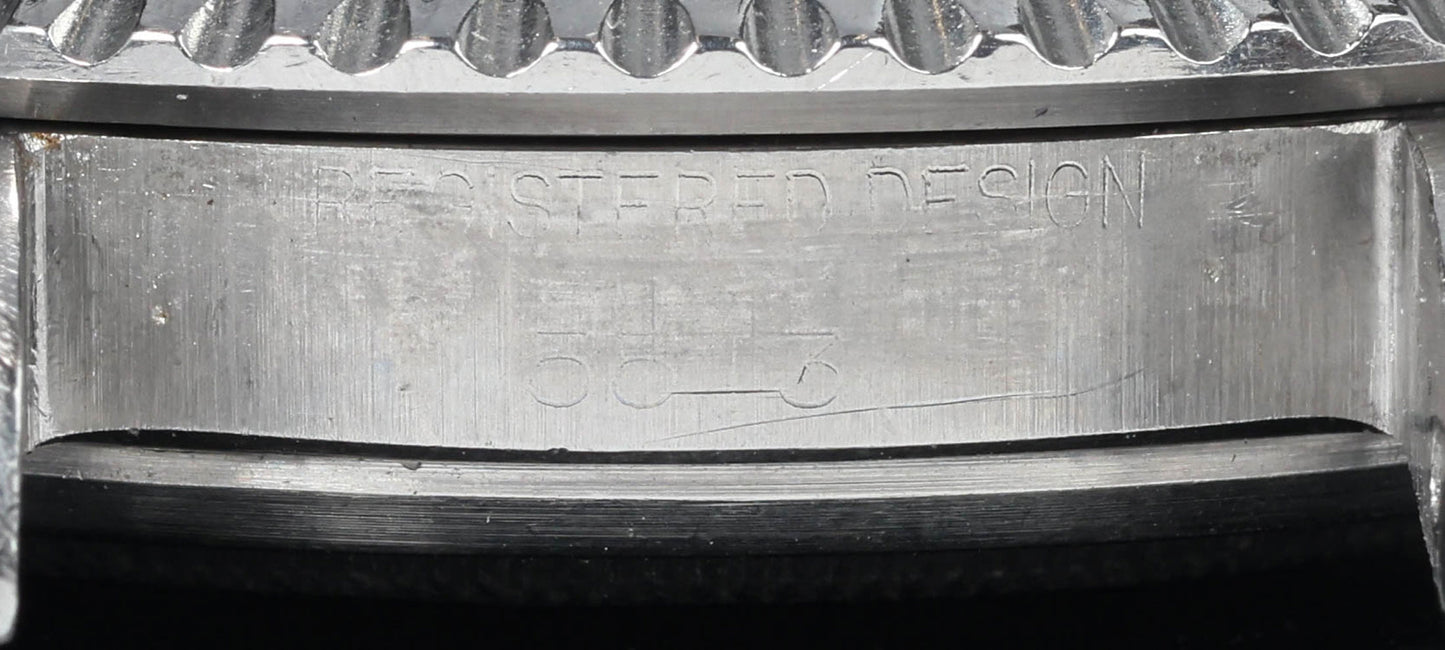
This Rolex Submariner 5513 meters first from 1967 is presented in great vintage condition. The stainless steel case shows light hairline marks around the case sides, consistent with careful wear over time. The lugs remain sharp with original factory brushing clearly visible, preserving the correct case geometry. There are no signs of pitting or corrosion, and the case presents cleanly and honestly throughout.
The dial has developed an attractive and even tropical patina, transitioning from its original black to a warm brown tone. This ageing is uniform and stable, enhancing depth while retaining excellent legibility. The hands match the dial well in tone and condition, creating a cohesive and period-correct appearance.
Share
Why we love this watch
Why we love this watch
Rolex Submariner 5513 Meters First with Tropical Dial
Introduction
Produced from the early 1960s through to the late 1980s, the Rolex Submariner 5513 is one of the longest running and most technically consistent professional models Rolex ever produced. Within that extended production run, early meters first examples with gilt dials occupy a particularly important position. Some of these dials have aged from their original glossy black to warm brown tones, a phenomenon more accurately described as a tropical dial rather than a specific colour descriptor. This article examines the Submariner 5513 in meters first configuration with a tropical gilt dial, focusing on its technical construction, movement, case architecture, and historical role as a professional diving instrument.
The Submariner Before the 5513
By the time the 5513 was introduced, the Submariner had already established itself as a credible underwater tool. Earlier references had validated the Oyster case concept, screw-down crown, rotating timing bezel, and high-contrast luminous dial as practical solutions for diving. Rolex’s development philosophy during this period was incremental. Each reference refined proven ideas rather than introducing unnecessary complexity.
The early 1960s were a transitional period for Rolex professional watches. While civilian demand was growing, models like the Submariner were still designed primarily as instruments. The 5513 was conceived as a no-date diver, prioritising clarity, durability, and reliability. By omitting the date complication, Rolex reduced mechanical complexity and preserved dial symmetry, reinforcing the watch’s utilitarian focus.
What “Meters First” Means
The term “meters first” refers to the depth rating printed on the dial, where the metric measurement precedes the imperial one. On the Submariner 5513, this appears as “200m = 660ft.” This layout places these dials earlier in the production timeline and reflects Rolex’s international orientation at the time. Metric measurement was standard in most professional diving environments, and leading with meters aligned the Submariner with its intended global use.
Meters first dials are closely associated with gilt construction. Rather than printing text on top of the dial surface, Rolex used a negative relief process. The black lacquer was applied over a brass dial blank, and the text and minute track were created by exposing the underlying metal. This method produced gold-toned printing with depth and permanence, distinct from later matte dials with white text.
Gilt Dial Construction and Tropical Ageing
Early 5513 dials were finished in glossy black lacquer with applied hour markers filled with luminous material. The gilt printing and minute track appear slightly recessed, giving the dial visual depth. This construction enhanced legibility and reflected the manufacturing standards of the period.
Over decades, some gilt dials underwent chemical change. Prolonged exposure to ultraviolet light, heat, and oxygen can cause the black lacquer to break down and shift toward brown tones. When this ageing occurs evenly across the surface, the dial is described as tropical. Importantly, this is not a modification or treatment, but a natural outcome of material interaction over time.
On a meters first 5513, a tropical dial often presents as a uniform warm brown or chestnut tone, while the gilt text remains crisp and legible. The transformation does not affect the function of the dial. Hour markers, tracks, and text remain clear, and contrast is preserved. The result is a dial that records the passage of time without compromising its original purpose.
Case Architecture and Proportions
The Submariner 5513 uses a 40 mm stainless steel Oyster case with crown guards, rated to 200 metres. Early examples feature pointed crown guards, later evolving into more squared profiles. Regardless of guard style, the case proportions are balanced, with relatively thin lugs and a slim mid-case compared to modern dive watches.
Water resistance is achieved through Rolex’s screw-down crown and case back system, a design already well proven by the time the 5513 entered production. The rotating bezel, fitted with an aluminium insert, allows divers to track elapsed time safely without the risk of accidental extension.
The acrylic crystal contributes both function and character. It offers impact resistance and adds a subtle distortion at the dial edge, softening transitions and enhancing legibility underwater. This crystal profile is a defining element of the vintage Submariner aesthetic.
Dial Layout and Legibility
The dial of the 5513 is deliberately restrained. Large luminous hour markers provide immediate orientation, while the Mercedes hour hand, pencil minute hand, and lollipop seconds hand are each optimised for clarity. On meters first gilt dials, the gold-toned printing contrasts effectively against both black and tropical brown surfaces.
As the dial ages and takes on a tropical tone, the luminous plots often develop a matching warm patina. This parallel ageing reinforces visual coherence across the dial. Despite the colour shift, the hierarchy of information remains unchanged. Time is read instantly, and the dial continues to perform exactly as intended.
Movement and Technical Specification
The Submariner 5513 was fitted with non-chronometer rated automatic movements throughout most of its production life. For examples dating to the mid to late 1960s, including those with serials around the 1.8 million range, the correct movement is the Rolex calibre 1520.
The calibre 1520 is an automatic movement beating at 18,000 vibrations per hour. It was selected for its robustness and reliability rather than certification. The movement features a free-sprung balance with Microstella regulation and a full balance bridge, improving stability under shock. Its architecture is straightforward, reflecting Rolex’s focus on durability in professional applications.
By omitting chronometer certification, Rolex was able to simplify regulation while maintaining dependable performance. In practice, the calibre 1520 proved highly durable and well suited to a time-only dive watch intended for extended use in demanding environments.
Function in Use
Operating the 5513 is direct and intuitive. The crown sets the time, the bezel marks the start of a dive, and the dial delivers information immediately. There are no auxiliary displays or complications to interpret. This simplicity was deliberate. Underwater, clarity and reliability matter more than versatility.
The absence of a date window eliminates the need for quickset adjustment and preserves dial symmetry. This reinforces the 5513’s identity as a purpose-built diver rather than a multi-role watch adapted for daily convenience.
Wearing Experience
On the wrist, the Submariner 5513 wears smaller than its dimensions suggest. The slim case, narrow bezel, and acrylic crystal create a compact profile. The watch sits flat and balanced, with proportions that remain comfortable even by modern standards.
A meters first 5513 with a tropical dial has a subtle presence. The dial colour shift is not immediately apparent from a distance, but reveals itself gradually as light changes. It feels worn in rather than preserved, reflecting decades of use rather than careful storage.
Historical Context and Longevity
The extended production run of the 5513 underscores the effectiveness of its original design. Rolex made gradual adjustments over time, but the fundamental architecture remained consistent. This continuity allowed the Submariner to serve successive generations of professional use without losing its identity.
Meters first examples represent the earlier phase of this evolution, when gilt dials and early case details were still in use. A tropical dial adds another historical layer, documenting how materials and environment interacted over time.
Why a Tropical Dial Matters
A tropical dial is not a design feature but a historical record. It reflects exposure, use, and material science rather than intent. On a meters first 5513, this ageing interacts with gilt printing, early case proportions, and the calibre 1520 to produce a watch that remains mechanically unchanged yet visually distinct.
Functionally, nothing is lost. Legibility, contrast, and usability remain intact. What changes is character. The watch carries visible evidence of time without sacrificing its original purpose.
Final Thoughts
The Rolex Submariner 5513 meters first with a tropical gilt dial is a clear expression of Rolex’s early professional watchmaking philosophy. It combines a historically important reference, early dial construction, and a naturally aged surface that reflects decades of real use. Powered by the calibre 1520 and housed in a robust Oyster case, it remains fundamentally the same tool Rolex intended. What sets it apart is not alteration, but time itself, recorded quietly on the dial.
Case & Bracelet
Case & Bracelet
- Case in great vintage condition, light hairlines visible around case sides.
- Sharp lugs with factory brushing visible.
- No signs of pitting or corrosion
Dial & Hands
Dial & Hands
- Dial has formed attractive ‘tropical’ patina
- Hands match dial
Warranty & Condition
Warranty & Condition
Crown Vintage Watches provides a minimum 6-month mechanical warranty on pre-owned watches, from the date of purchase.
The warranty covers mechanical defects only.
The warranty does not cover damages such as scratches, finish, crystals, glass, straps (leather, fabric or rubber damage due to wear and tear), damage resulting from wear under conditions exceeding the watch manufacturer’s water resistance limitations, and damage due to physical and or accidental abuse.
Please note, water resistance is neither tested nor guaranteed.
Shipping and insurance costs for warranty returns to us must be covered by the customer. Returns must be shipped via traceable courier. Return shipment must be pre-paid and fully insured. Collect shipping will be refused. In case of loss or damages, the customer is liable.
Our Pledge
At Crown Vintage Watches, we stand by the authenticity of every product we sell. For added peace of mind, customers are welcome to have items independently authenticated at their own expense.
Condition
Due to the nature of vintage timepieces, all watches are sold as is. We will accurately describe the current condition and working order of all watches we sell to the best of our ability.
Shipping & Refund
Shipping & Refund