

Crown Vintage
Rolex Submariner 1680 'Red' Mark 8 1969
Rolex Submariner 1680 'Red' Mark 8 1969
Couldn't load pickup availability
Vintage Rolex Submariner 1680 'Red' Mark 8 1969
Case and Bracelet
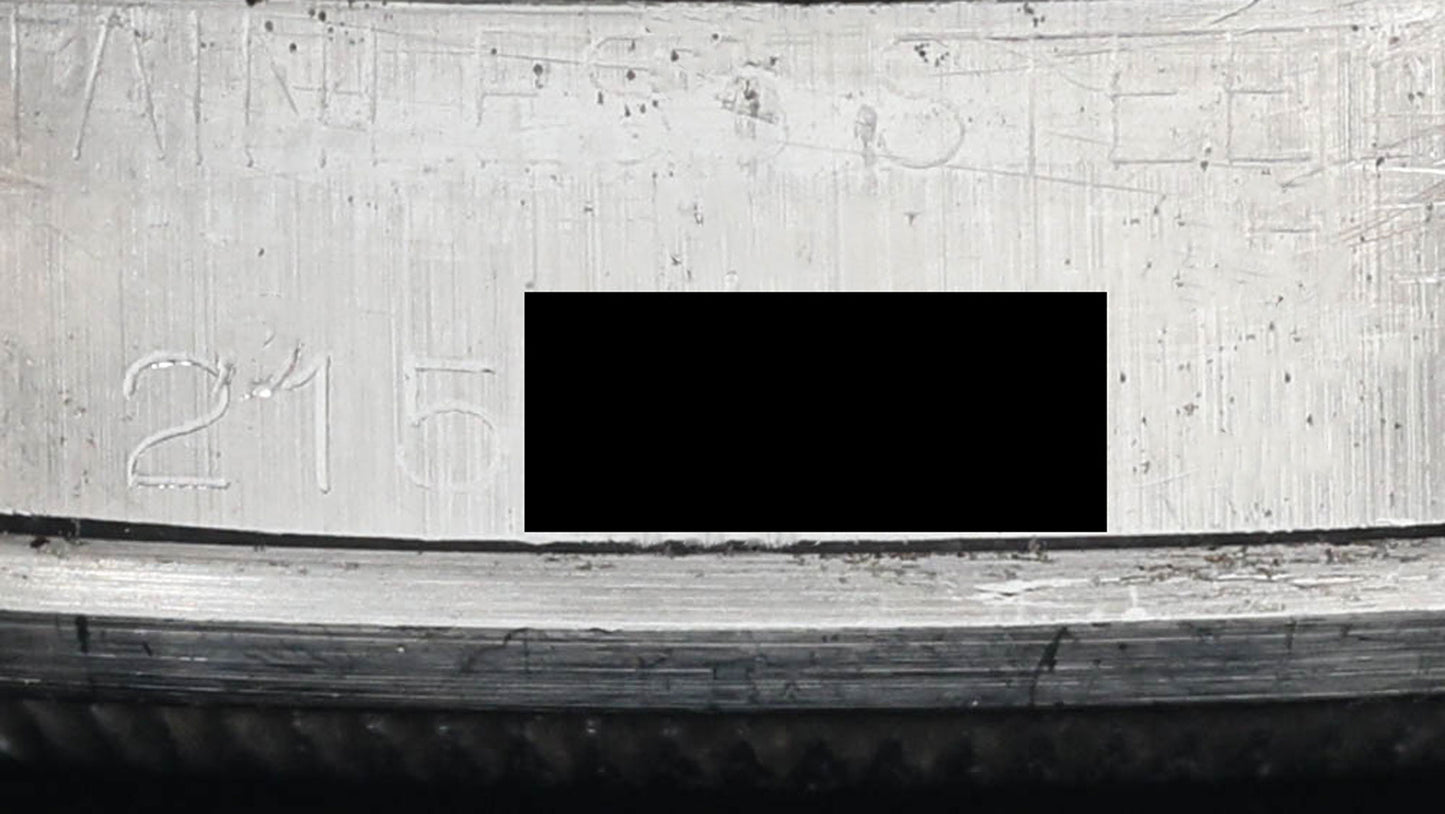
The 40mm Oyster case is in good vintage condition, with hairlines visible across the surfaces from wear, exactly as you would expect from a Submariner that has been used as intended. The lugs remain sharp and well defined, showing signs of light polishing over the years but holding their shape. The Oyster bracelet is in great condition overall, with only light wear visible on close inspection. It carries some stretch consistent with its age, typical of a bracelet of this construction, but remains secure and functional on the wrist.
Dial and Hands
The dial and hands are excellent. The printing is clean and crisp, including the red Submariner signature that defines the early 1680, and the lume plots are intact across the markers and hands. The overall visual presentation is strong, with the matte black dial reading clearly and the Mercedes handset complete and correct in appearance.
Use Advisory
This is a vintage timepiece, now well over fifty years old, and should be treated accordingly. It rewards gentler handling than a modern Submariner would ask for, and with regular servicing the calibre will continue to run reliably for years to come.
Share
Why we love this watch
Why we love this watch
The First Submariner to Tell the Date: A 1969 Rolex “Red” Reference 1680
The single line of red text above six o'clock on this 1969 Submariner marks the precise moment Rolex's dive watch first learned to tell the date. Until the reference 1680 arrived at the end of the 1960s, every Submariner had been a time-only tool, a black-dialled instrument built for the water and very little else. The 1680 changed that, adding a date window, a Cyclops to magnify it, and, on these early examples, the distinctive red SUBMARINER signature on the matte black dial. It is still unmistakably a Submariner: 40mm of steel, a rotating bezel, the Mercedes handset, and 660ft equals 200m printed across the lower dial. But it is the Submariner caught at a turning point.
A Watch Built for the Water
To understand the 1680 you have to start with what came before it. Rolex launched the Submariner in 1953, showing it publicly the following year, and built it from the outset as a diver's tool. The recipe was simple and durable: the waterproof Oyster case, a self-winding movement, a high-contrast black dial with bold luminous markers for legibility underwater, and a rotating bezel that let a diver track elapsed time at a glance. The earliest Submariners were rated to 100 metres, deep enough for the recreational and professional divers the watch was meant to serve, and the reference quickly became the standard against which every other dive watch would be measured.
Through the 1950s and 1960s the Submariner developed as a strictly time-only watch. References such as the 5512 and 5513 refined the formula, with crown guards added to protect the winding crown, greater water resistance, and the four lines of dial text that signalled a chronometer-rated movement. What none of them carried was a date. For a watch built to be read at a glance in low light, a date complication was, arguably, beside the point. That was the orthodoxy the 1680 was about to overturn.
It is worth remembering how the watch was actually used. The rotating bezel was not decoration; a diver would line up its marker with the minute hand on entering the water, then read elapsed time straight off the bezel as the dive went on, a simple and reliable way to monitor air supply and decompression without a separate instrument. The luminous markers and Mercedes hands existed so that the dial could be read in the gloom of deep water. Everything about the early Submariner was shaped by function, and that purity is exactly what made the addition of a date such a talking point when it finally came.
The Reference 1680
Rolex introduced the reference 1680 in the late 1960s, and this example dates to 1969. It was the first Submariner to carry a date, shown in a window at three o'clock and magnified by a Cyclops lens set into the crystal, a feature carried over from the Datejust. In a single stroke the Submariner line split in two. From this point on there would be a date Submariner and a no-date Submariner, two parallel branches that Rolex has maintained ever since. The 1680 was also the reference that introduced precious metal to the range, with the first solid 18 carat gold Submariner arriving in the same period.
Not everyone welcomed the change. For purists invested in the Submariner's identity as an uncompromising tool watch, the date and its magnifying bubble were the moment the model began drifting toward being an everyday watch, even a status symbol, rather than a pure diving instrument. Whether you read that as a loss or simply as growth, it is hard to overstate how consequential it was. Every date-equipped Submariner Rolex has built in the more than fifty years since traces directly back to this reference, Cyclops and all. The 1680 stayed in production until around 1979 and 1980, when the next generation of Submariner took over.
The Red Submariner
The detail that sets the early 1680 apart sits in a single word. For the first part of the reference's run, from its introduction until roughly the mid-1970s, Rolex printed SUBMARINER in red on the matte black dial rather than the usual white, which is how these watches earned the lasting nickname Red Submariner, or simply Red Sub. The red text was later phased out, market by market, in favour of all-white printing toward the end of the decade. Set against the matte black dial and the white of the surrounding text, that single line of red gives the early 1680 a quiet flash of colour that the later versions lost.
Across the red-text years Rolex made a number of small dial changes, in the layout of the depth rating, the fonts, and the way the red was applied, and these slight differences are catalogued in detail by those who study the reference closely. What they all share is the four-line dial and the red signature that define the era. The dial fitted to this watch is a Rolex service dial, the kind a watch of this age often acquires over a long life, and it carries the same red Submariner script.
The Movement Inside
Driving the 1680 is the calibre 1575, the date-equipped version of the time-only 1570 that Rolex used across its catalogue in this era, both descended from the earlier 1530. It is a chronometer-certified automatic beating at 19,800 vibrations per hour, with a power reserve of roughly two days. The same family of movements powered the Datejust and the GMT-Master of the period, which tells you something about Rolex's approach: rather than design a fragile, specialised calibre for the diver, the brand fitted the Submariner with the same proven, hard-wearing engine it trusted everywhere else. A quirk of these movements is that they are stamped 1570 whether or not they carry the date function, so a 1575 inside a Submariner will read 1570 on the bridge. From around 1971 the calibre gained a hacking, or stop-seconds, function, letting the seconds hand be halted for precise setting. None of this was about decoration. The 1500-series movements were built to keep running more or less indefinitely, which is exactly what a tool watch demands.
Case, Bezel and Crystal
The 1680 uses the 40mm steel Oyster case that has defined the Submariner's proportions for decades, with crown guards flanking the screw-down Twinlock winding crown and a screw-down caseback sealing it to 200 metres, the 660 feet noted on the dial. The bezel rotates in both directions, with a black aluminium insert graduated to sixty minutes. That bidirectional bezel is itself a piece of history, because the 1680 was the last Submariner to use one before Rolex switched to a unidirectional bezel, which can only be turned in the direction that makes a diver overestimate elapsed time, a built-in margin of safety.
Over the dial sits a domed acrylic crystal, standing tall and stepped, with the Cyclops moulded in above the date. This too is worth noting, because the 1680 is the only date Submariner Rolex ever fitted with an acrylic crystal; every date Submariner after it switched to flat synthetic sapphire. Acrylic scratches more readily than sapphire but polishes out just as easily, and it gives the watch a warmth and a softness that the later, harder crystals never quite match. The Mercedes handset, with its distinctive three-pointed hour hand, completes a look that has barely changed in seventy years.
Why the 1680 Matters
It is easy, with hindsight, to take the date Submariner for granted, because it has been part of the range for so long. But the 1680 was the watch that made the decision. It took an established, almost sacred tool-watch design and added a complication its most devoted followers did not necessarily want, and in doing so it set the course for what the Submariner would become: not only a diver's instrument but one of the most recognisable everyday watches in the world. The Cyclops that debuted on the Submariner here has appeared on every date model since. The split between date and no-date lines that began with the 1680 still structures the collection today.
In other words, this is the reference where the modern Submariner takes shape. The no-date branch carried the original tool-watch purity forward, while the date branch, beginning here, became the version most people picture when they think of a Submariner at all. A 1969 example sits right at the start of that story, in the first year or two of the change, wearing the red text that belongs only to the earliest chapter.
The 1680 also sat within a wider moment of expansion for Rolex's diving watches. The deep-diving Sea-Dweller had emerged in the same era, built to go far beyond the Submariner's depth, and the introduction of a gold Submariner showed that Rolex saw the line as more than a single-purpose instrument. The 1680 was the watch that bridged those worlds, keeping the unmistakable Submariner identity while opening it up to a broader everyday role. Seen that way, the reference is less a departure from the Submariner's roots than the moment the model grew into the icon it has been ever since.
Wearing It Today
For all its historical weight, the 1680 is a remarkably easy watch to live with. At 40mm it is substantial without being large, sized exactly as a Submariner should be, and the domed acrylic lends the whole watch a vintage softness under the light. The matte black dial reads cleanly, the red text adds its small spark of colour, and the decades tend to leave their mark in ways that suit the watch rather than spoil it. Aluminium bezel inserts of this age often fade from deep black toward grey or a faint blue, tritium lume mellows to a warm cream, and the steel takes on the gentle softness of a case that has actually been worn.
That lived-in quality is part of the appeal of any vintage Submariner, and the 1680 wears it particularly well. It is a watch with real purpose in its design, every element present for a reason, that has also aged into something with genuine character. It looks like exactly what it is: a tough, functional diver from the end of the 1960s that has spent half a century quietly becoming a classic.
Final Thoughts
The reference 1680 is the hinge in the Submariner's long history, the watch where Rolex's most famous diver first gained a date and, with it, a second life as an everyday icon. A 1969 example catches that moment at its very start, with the red SUBMARINER text that marks the earliest years of the reference. The history of the Submariner explains why the 1680 was so significant, and why some greeted it with suspicion. The watch itself, black-dialled, red-lettered, and built to keep working for as long as it is cared for, explains why it has endured. It is the point at which the Submariner stopped being only a tool and started becoming the watch we know now.
References
1. Rolex, “Submariner.” rolex.com.
2. Monochrome Watches, “History of the Rolex Submariner, Part 2: The 55XX and 1680 References.” monochrome-watches.com.
3. Bob’s Watches, “The Rolex Submariner 1680: The Ultimate Reference Guide.” bobswatches.com.
4. Bob’s Watches, “Red Rolex Submariner 1680 Ultimate Guide.” bobswatches.com.
5. Italian Watch Spotter, “Everything You Need To Know About The Submariner 1680.” italianwatchspotter.com.
6. WatchGuys, “Rolex Submariner 1680 Review.” watchguys.com.
7. Analog:Shift, “Rolex Red Submariner, 1968.” analogshift.com.
Case & Bracelet
Case & Bracelet
- Case in good vintage condition, light hairlines visible on case.
- Bracelet in Great condition
- Bracelet shows light stretch
Dial & Hands
Dial & Hands
- Dial & hands excellent condition
Warranty & Condition
Warranty & Condition
Crown Vintage Watches provides a minimum 6-month mechanical warranty on pre-owned watches, from the date of purchase.
The warranty covers mechanical defects only.
The warranty does not cover damages such as scratches, finish, crystals, glass, straps (leather, fabric or rubber damage due to wear and tear), damage resulting from wear under conditions exceeding the watch manufacturer’s water resistance limitations, and damage due to physical and or accidental abuse.
Please note, water resistance is neither tested nor guaranteed.
Shipping and insurance costs for warranty returns to us must be covered by the customer. Returns must be shipped via traceable courier. Return shipment must be pre-paid and fully insured. Collect shipping will be refused. In case of loss or damages, the customer is liable.
Our Pledge
At Crown Vintage Watches, we stand by the authenticity of every product we sell. For added peace of mind, customers are welcome to have items independently authenticated at their own expense.
Condition
Due to the nature of vintage timepieces, all watches are sold as is. We will accurately describe the current condition and working order of all watches we sell to the best of our ability.
Shipping & Refund
Shipping & Refund